
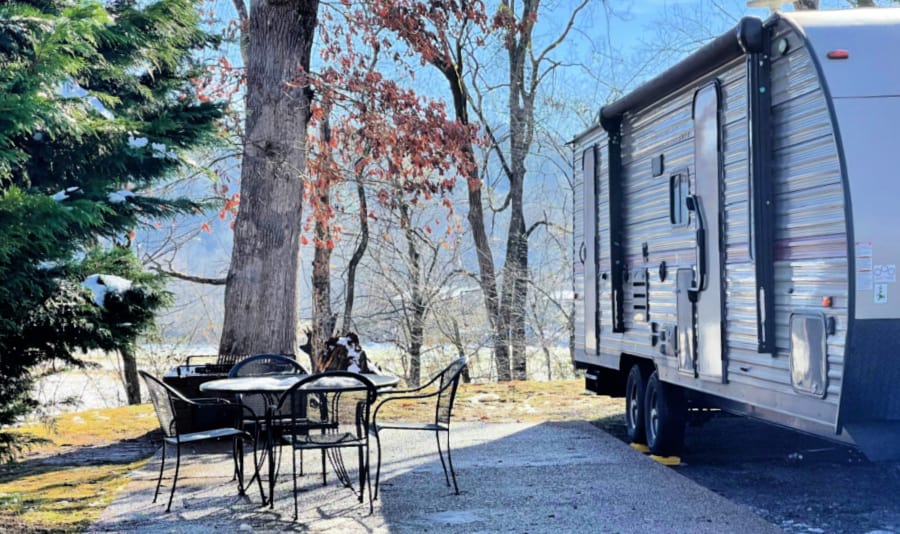
Choosing the Best Inverter Generator for Your RV
One of the most misunderstood pieces of camping equipment is the RV generator. Many campers choose to boondock when they are camping. Boondocking is camping without water or electric hookups. Therefore, boondockers need an RV generator to provide electricity to their campers. Campers use two different types of generators: the inverter generator and the open-frame generator. We would recommend that all campers use inverter generators.
The best inverter generators for camping are the Westinghouse igen4500, Duromax XP4500ih, Champion 3400 Dual Fuel, and the Honda EU3000. These generators are perfect for camping and will run all of the devices in your RV.
Advantages of Inverters
Inverter generators, or “inverters,” are quieter and more stable than traditional open-frame generators. Open-frame generators convert a fuel source such as gasoline to AC power. Inverters convert the fuel source to AC to DC and back to AC. As a result, inverter generators are more reliable and have a consistent energy output. This power stability is essential because campers have fragile electronics that inconsistent power outputs can damage.
Inverters are also more energy-efficient than their counterparts because they use only the fuel necessary to run the equipment hooked up to the inverter. In addition, inverters are more compact, making them easier to transport than a traditional open-frame generator, thus making them great RV generators.
Advantages of Traditional Open Frame Generators
Open-frame generators are less expensive than comparable inverters. However, traditional generators produce more power than inverters. An open-frame generator can have up to 17,000 watts, yet an inverter can only produce about 7,000 watts. An open-frame generator is excellent for emergency backup when powering an entire house. Still, an inverter is generally better than an RV generator because it is quieter.
Fuel Sources
Most generators use either gas, diesel, or propane as their fuel source. Gasoline is more efficient and produces more power while consuming less fuel. However, a propane generator runs much cleaner. Another advantage of propane is that most campers carry propane, and you can refill tanks at many campgrounds. In our opinion, the biggest plus for propane is storage. It is much easier to store propane in a cylinder on your rig than it is to store gasoline. In addition, gas cans usually release fumes that make them unpleasant to carry while traveling. Many duel fuel inverters will allow you to conveniently use gas or propane when operating.
What Size RV Generator Do I Need?
Generator size is measured by the number of watts it can produce. Therefore, you must do some math to determine the required RV generator size. Volts x Amps = Watts. So as a general rule, a 30-amp camper will need a 3,600-watt generator to run 30 amps of equipment simultaneously. While this is a good rule of thumb, there are a few things to consider. For example, starting an electrical component often takes much more energy than running the appliance. Below is a list showing the amps needed to run various devices typically found on RVs. These numbers are approximate values and can vary depending on the size and power output of the device.

A 13,500 BTU air conditioner draws 1,250 watts while running but requires 2,750 watts to start. This high draw to start is not a problem if you do not have another appliance pulling amps simultaneously. However, if you believe this will be a problem, consider adding a SoftStart device to your air conditioner. SoftStart RV (Check it out on Amazon) reduces the power needed to start the camper air conditioner by up to 70%. Reducing that initial electrical surge makes creating your air conditioner consistently with less power easier.
Parallel
Running a 15,000 BTU or two 13,500 BTU air conditioners can be difficult with an inverter generator. To effectively do this, you can run two parallel generators. It is best to use two generators of the same make and model. Running two generators parallel will double the potential output, so two 3500-watt generators running parallel become one 7000-watt output generator.
Best Inverters to Take Camping
Westinghouse igen4500
The Westinghouse igen4500 (Check it out on Amazon) is an excellent inverter generator to take camping. The Westinghouse is rated for 3700 watts and will peak at 4500 watts, so it is perfect for a 30-amp camper. This generator runs on gasoline. The Westinghouse generator has a large 3.4-gallon tank and will run for 18 hours.
The generator has an easy push-button start. A standard 30-amp camper plug can be used without an adapter. In addition to the 30-amp outlet, there are two USB outlets and two 120-volt, 20-amp outlets.
The igen4500 has a digital fuel gauge indicating power output and remaining runtime. The Westinghouse is among the quietest models on the market, with a 52-decibel result.
Duromax XP4500ih
The Duromax XP4500ih (Check it out on Amazon) is a reasonably priced dual filter inverter generator. This model peaks at 4500 watts and has 3600 running watts. A 30-amp camper can connect without an adapter. The generator can run parallel with another Duromax if necessary to increase the power output.
The XP4500ih has a push-button start, and in addition to the 30 amp outlet, it has a couple of 120 volts, 20 amp outlets, and a USB outlet.
Champion 3400 Dual Fuel
The Champion 3400 (Check it out on Amazon) is also a dual-fuel inverter generator that is RV-ready with a 30 amp outlet. It has 3400 starting amps and will run at 3100 amps to handle most 30-amp RVing needs. The Champion can also run parallel with another Champion generator to increase the power output. It is a quiet generator with a sound production of only 59 decibels.
In addition to the 30-amp outlet, this model has two 20-amp, 120-volt outlets.
Honda EU3000
Honda inverter generators are among the best on the market. The Honda EU3000 (Check it out on Amazon) runs at 2800 watts and peaks at 3000. It will run a 13,500 BTU air conditioner, but I suggest installing a SoftStart RV since this generator is less powerful.
This model is not RV-ready and will require an adapter (Check it out on Amazon) to connect a standard 30-amp cord. However, the EU3000 can run parallel with another Honda generator to provide additional power.
An RV generator is an essential piece of equipment for any camper planning to boondock. However, you must choose one that fits your needs. We suggest you spend more money purchasing an inverter generator than an open-frame generator. They are quieter and produce a more consistent power output making them worth the extra money. They serve as great RV generators.
Do you use an RV generator? What type do you use? We would love to hear from you. Please drop us a line in the comment section below.


Wesitinghouse also has a dual fuel version igen4500DF that uses gas or propane. I love my 4500 and it runs everything except my 2nd AC and size/weight is manageable. Lastly and importantly, it’s very quiet!
That is great. Thanks for the information.