
Camper Floorplans: How do I Choose the Right One?
One of the most important decisions you can make when buying a camper is in choosing the right floorplan. There are numerous floorplans and features available on campers, yet they will differ slightly by model. I would suggest visiting a dealer or, better yet, a camper show to explore floorplan options and determine what best fits your needs (Check out this article on purchasing a camper).
Floorplans
Floor plans and features are the most significant reason people trade in their camper for something new. Our first camper was a 22 1/2-foot bunk-house travel trailer. Even though we spend 90% of our time outside when camping, the camper lacked a sofa to sit on and it was difficult to comfortably watch a movie at night. Our bathroom, and shower, in particular, was very tiny. As a result, we did not use the shower and instead used a shower tent outside. We wanted a new camper where we could use the shower and have a sofa.
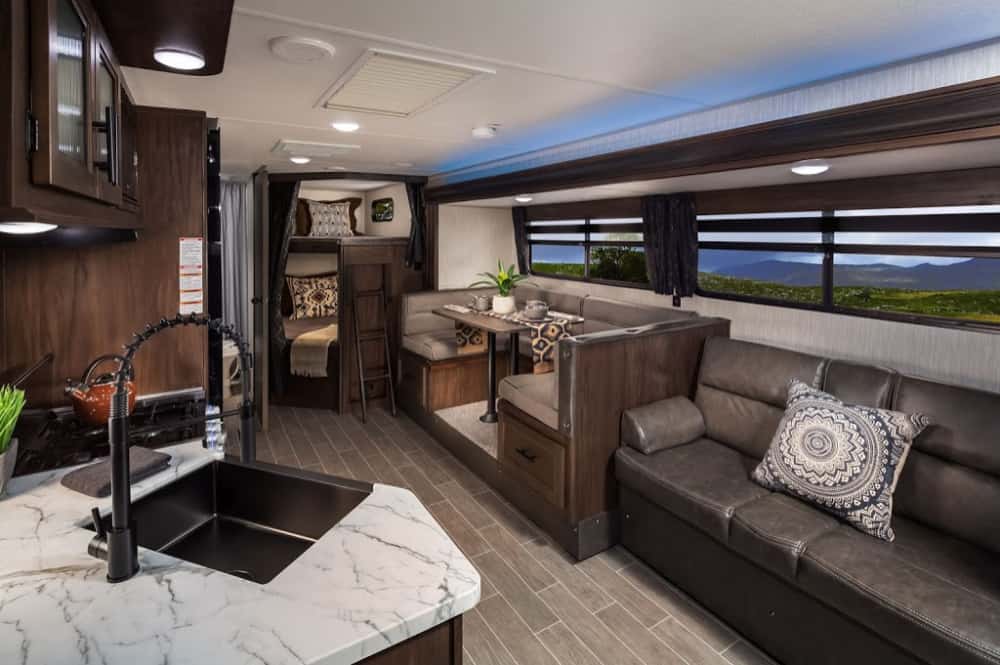
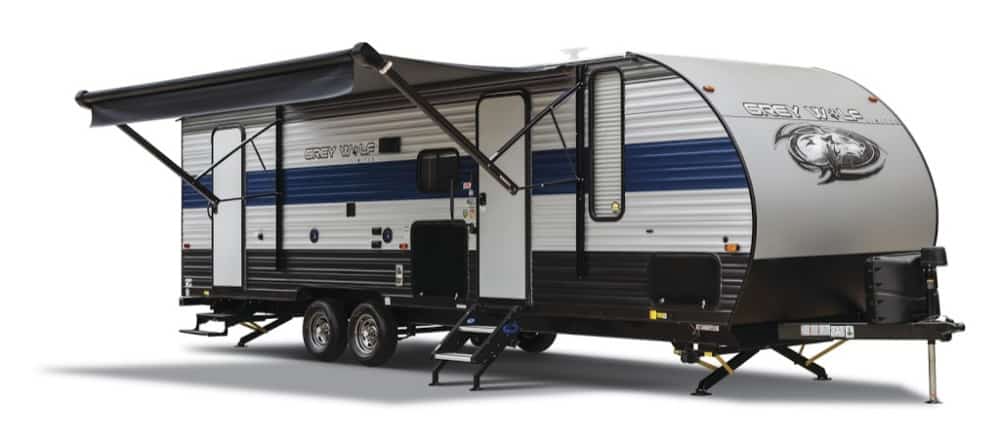
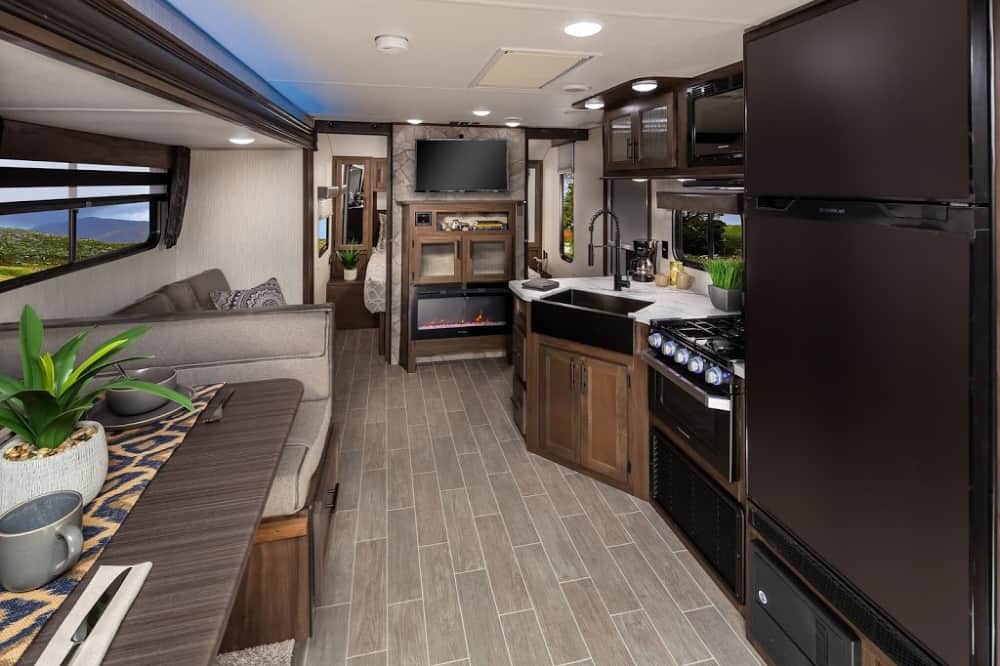
While at a camper show, we found a 26-foot Grey Wolf DBH that fit our needs perfectly. The shower was large enough to use, and the camper has a loveseat where we can sit. The DBH also has double bunks, instead of single bunk beds, giving the kids more room. The Grey Wolf has an oversized u-shaped dinette that we wanted. The dinette is the place that we sit on rainy days or in the evenings to play games (Check out our article on fun family activities).
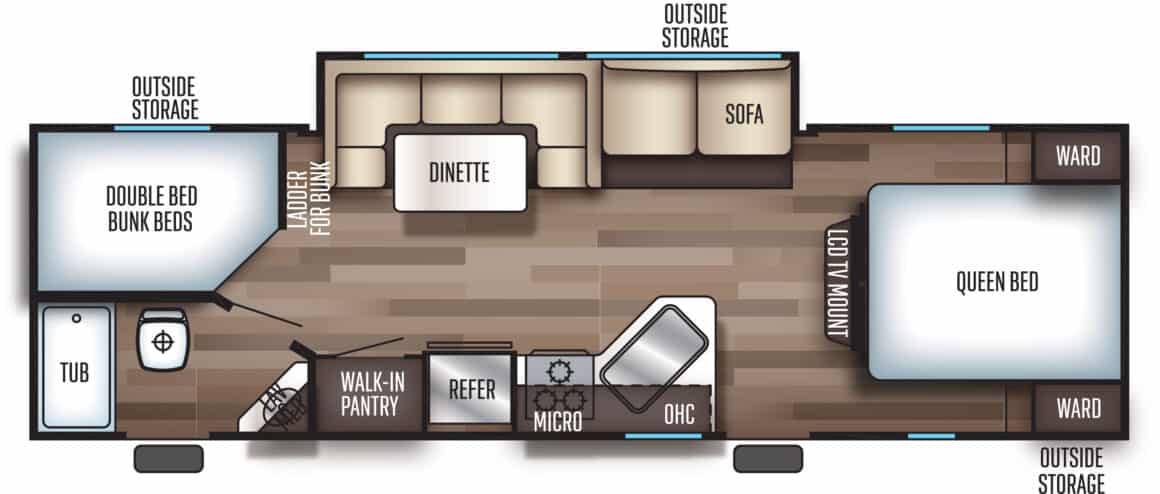
Floorplans will vary depending on what type of camper you decide to purchase (Check out our article on types of campers). Almost all travel trailers have a bedroom in the front of the camper, whereas Class A’s typically have the master bedroom in the rear of the coach. Just remember when choosing a floorplan, there is limited space, so additional options and amenities usually come at the expense of other features. You will need to determine what floorplan best accommodates your wants and needs.
How Many Does it Sleep?
The number of people that will be camping with you is an important consideration because it will determine how much room you need. You will want to determine how many people that the camper can sleep. If you decide to buy a unit with bunks, then you will usually have less living space for items such as recliners or a sofa. Most of the time, your sofa and dinette convert into beds. However, the conversion is a process, especially with the dinette, and you may not want to go through this every day.

Remember, buy a camper based on the needs of who you know will be consistently camping. I cannot tell how many people we have met who have regretted purchasing a camper with a bunkhouse because they thought it would be great for grandkids, only for the grandchildren to use it once or twice. You can always use airbeds for additional guests if they decide to camp with you. An alternative to buying a camper with a bunkhouse is purchasing a set of portable bunks (Check them out on Amazon). The storable bunks are perfect for the grandchildren that camp occasionally and they are also available in adult sizes.
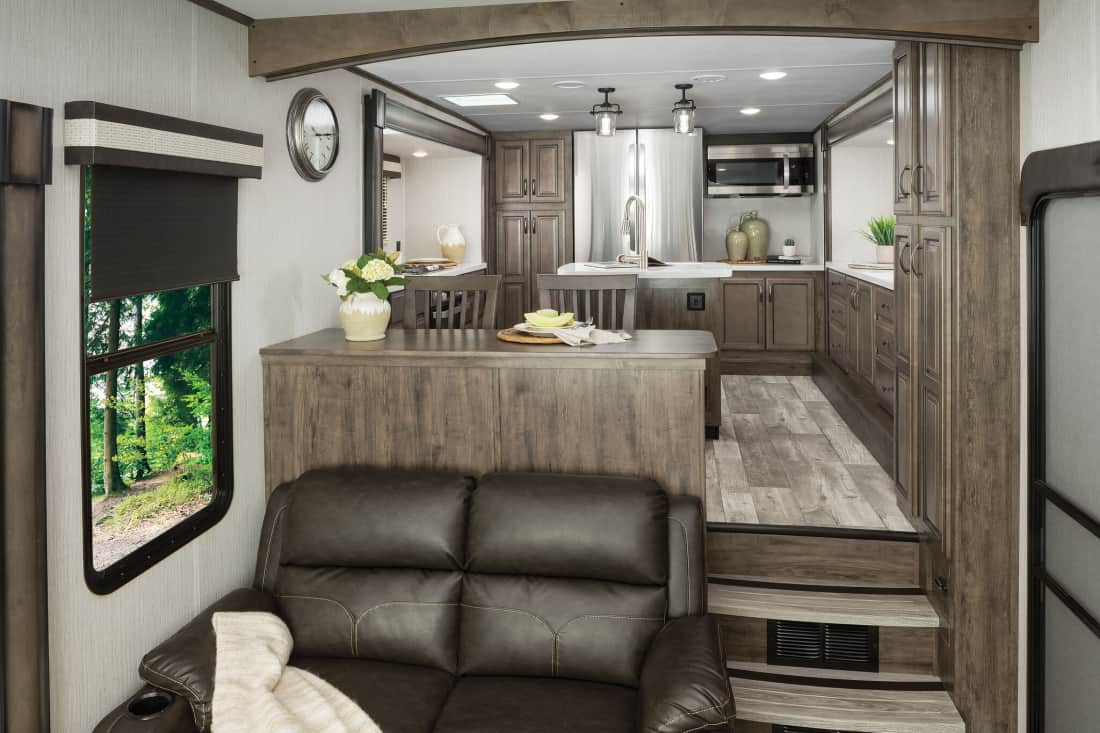
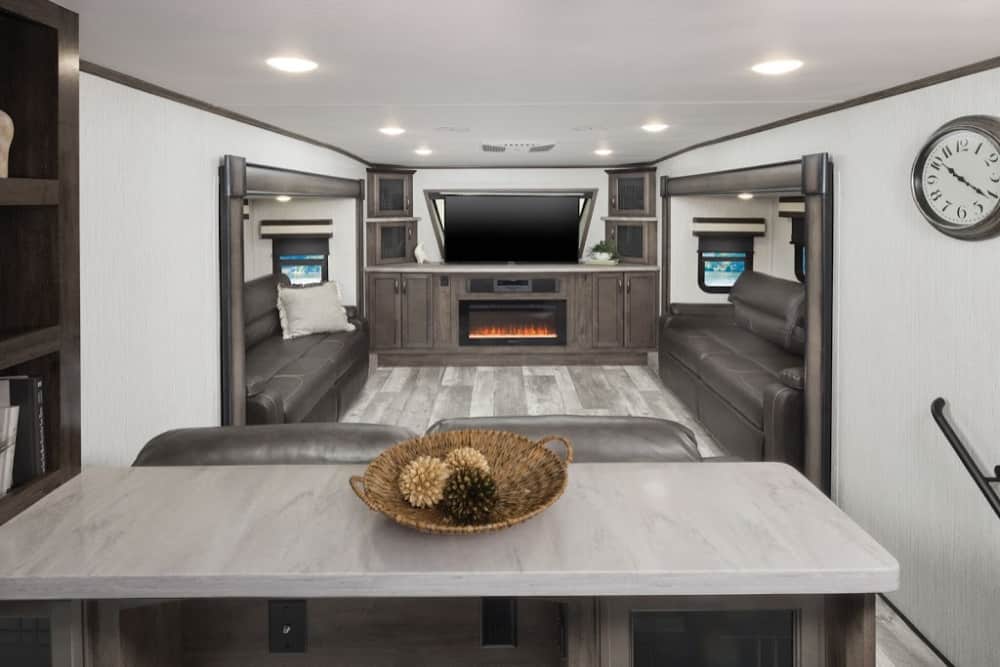
Fifth wheel floor plans can vary greatly, so it is important to determine what works best for you. Although fifth wheels are generally larger units than travel trailers, many have one bedroom and do not have a bunkhouse. Most fifth wheels have the master bedroom with a separate bathroom in the upstairs area, which is excellent for privacy. However, some have the living room or even a kitchen upstairs. There is a lot of room in this area of a fifth wheel, so it makes for a large living space.
Kitchen

After determining your sleeping arrangements, the next important feature to consider in a camper floorplan is the kitchen. First, decide how much you will use the cooking area. We know some campers who love to cook and frequently use the kitchen to prepare their meals. We also know others who rarely use the kitchen, and our family falls into this category. When we are camping, we like to go into town and explore. Exploring usually lends itself to us dining at a local restaurant at least once on each camping trip. The majority of our cooking is done outside at the campground. Although space in the kitchen is important to us, our oven and microwave are never used (Check out our article on cooking at the campground).
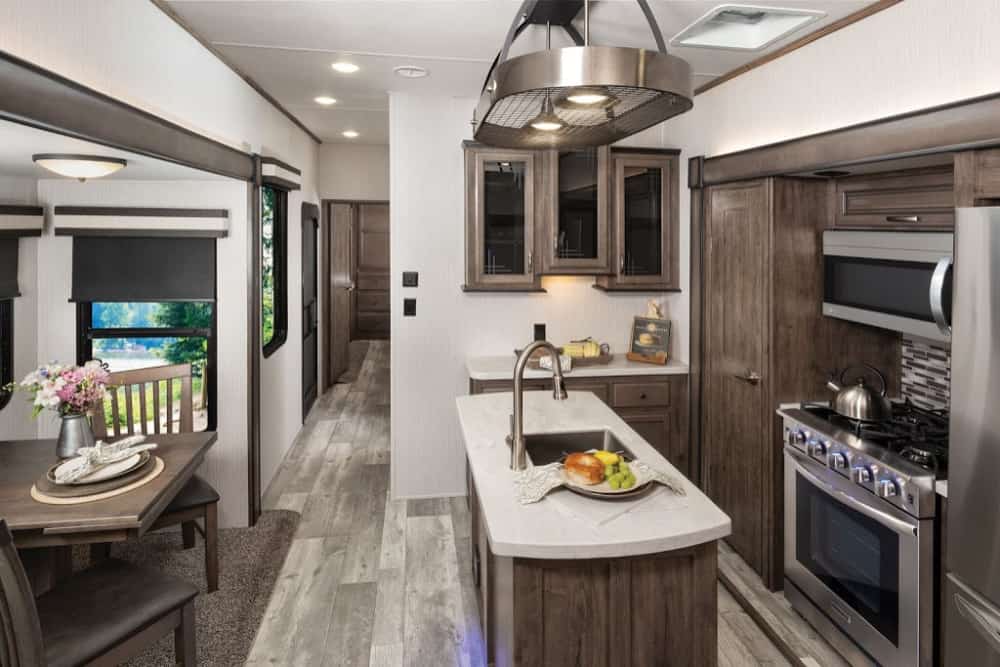
If you plan to cook inside the camper, ensure that you pick a kitchen with space and amenities that you needed to prepare a meal. Most camper ovens are smaller than residential ovens. Some larger campers have islands in the kitchen, as well as residential refrigerators and a food pantry.
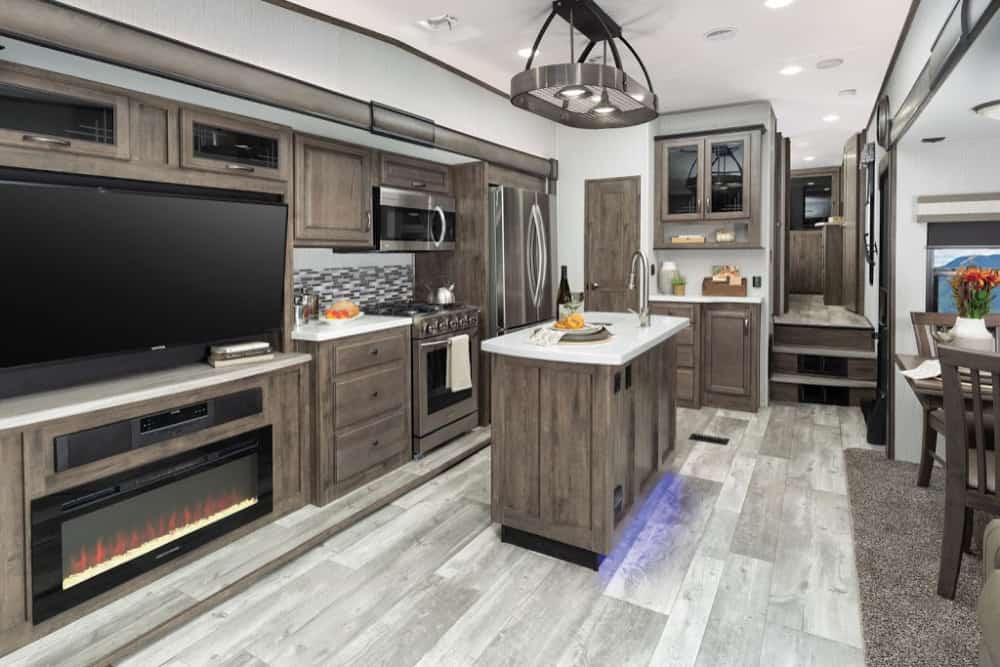
There are other kitchen options to consider, such as if you want a microwave, convection oven, or a combo unit.
Bathroom
Most RVs, including pop-ups, have some sort of bathroom. However, size and amenities within bathrooms vary by camper. In our first camper, it was challenging to take a shower without spraying the entire bathroom. We only used the shower twice and decided that there had to be a better option. Brandi purchased a changing room/tent made by Lightspeed (Check it out Amazon) and set it up behind our camper. We cut a hole in the top of the tent and ran the outside shower head into it. Our shower was unconventional, but it worked. We knew that in our next camper, we wanted to bathe inside.

Ceilings are typically lower in campers than in fifth wheels, and headroom is limited in bathroom showers. Camper showers are often challenging for anyone over 6 feet tall. Most campers have a sunlight above the shower to provide a little extra room. Some campers have a shower/tub combo where you can bathe an infant as well. If you have a large family, you may want to consider finding a camper with two full bathrooms or at least a bath and a half.
Bedroom
There a few things to look for in a bedroom floorplan. The first is the size of the bed. Most campers come with a queen-sized bed. Many owners feel that they need a king size bed because that is what they have at home. Which size bed you purchase is up to you. Just remember, a king size bed means more room in the bed, but less space in the bedroom.

Many campers come with an RV king or RV queen bed. These mattresses are the same width as a traditional king or queen but they are slightly shorter. Lay down on the bed to make sure it will work for you, especially if you are tall. Campers usually include stock mattresses that are not comfortable. You may want to replace the mattress quickly (Check out our article on replacing your camper mattress).
Make sure you have enough room to walk around to make your bed. Some campers have one side of the bed against a wall. This means that the only way to exit the bed is to crawl over your spouse. We like having a little table or shelf next to each side of the bed where we can lay our phone and a bottle of water. Campers that do not have a place to keep a few items next to the bed is a deal-breaker for us.

Closet space is at a premium in the bedroom as well. Many travel trailers lack space in the closet area. You will need to be creative when storing clothes, especially if you are going to be gone for longer than a weekend (Check out our article on storage in your camper). Many campers have additional storage under the bed. This is a great location to carry items that you do not use a lot but that you want to carry with you.
Carpet
One area that is non-negotiable for us when purchasing a camper is the carpeting. We want a camper that has little to no carpet. Our first camper included carpeting directly beside the shower and we never understood the purpose. Over time, carpets tend to stain and trap dirt. The lack of carpet in our current camper was one of the biggest selling points when we purchased it. Although it may seem trivial, considering your carpeting preferences is definitely important.
Doors
An area that is often overlooked yet is so important when considering floorplans is with camper doors. Think about how you will enter and exit your camper. Most campers have a door near the front of the rig, and some campers also have a second door near the rear. The door near the back usually leads straight into a bathroom. If you get dirty or muddy, an entry bathroom door can be helpful so that you have a place to enter the camper and immediately change out of your wet or dirty clothes. We find this door particularly helpful when camping at the beach. Having two doors is not mandatory, but can be very helpful.
Slide vs. No Slide
We have always purchased campers with slides, and I cannot imagine ever purchasing a camper without one. Slides provide extra room and make the living area and sometimes the bedroom area quite large. Multiple slides can double a camper’s living space. However, there are people who do not like slides.
The drawback to a slide is that there is an increased chance that something will go wrong. Usually, when a slide fails, something has happened to the motor. Motor issues lead to the slide not opening or closing properly. However, all slides have manual overrides. Leaks can happen around the slide seals, and that is why it is important to complete routine maintenance (See our article on slide maintenance).
It is best to look at campers with and without a slide to help you determine what is the best option for your needs. For our family, the benefit of the extra camper space outweighs the chance that the slide will malfunction. This is definitely an area of preference and one to consider when choosing a floorplan.
30 Amp vs. 50 Amp
Almost all campgrounds that offer electricity include 30-amp power, and many offer 50-amp power. If you purchase a 50-amp camper and visit a campground that only has a 30-amp power supply, you will need an adapter to connect to the pedestal because the fittings are different. Using an adapter is fine and will not hurt the camper; however, you will only be receiving 30 amps of power.
The more amps that are available leads to more electric devices that you can operate at one time. Every electrical device in your camper draws amperage. For example, a typical 15,000 BTU air conditioner draws about 12.5 amps. Items that heat or cool use more amps. A microwave draws between 8 and 13 amps, while a convection oven draws 13 amps. Any combination of these items running at one time will draw more than 30 amps, which will flip a breaker. A 50-amp camper allows a lot more flexibility in the number of things that you can use at once.
Manual Jack vs. Electric Jack
Our first camper had a manual jack. While the manual jack was usable, it was eventually replaced by an electric jack (Check it out on Amazon). Replacing the jack was one of the best decisions I made. An electric jack is so much easier, especially on those 90+ degree days. If you do have a manual jack, this is an easy upgrade. An electric jack costs around $100.00.
Electric Stabilizing Jacks
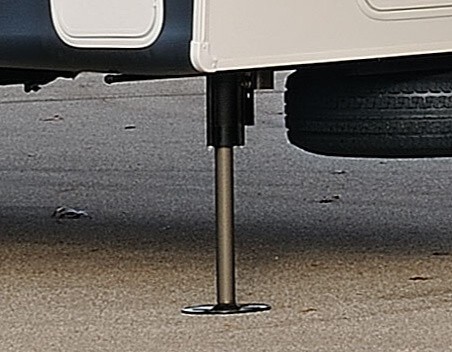
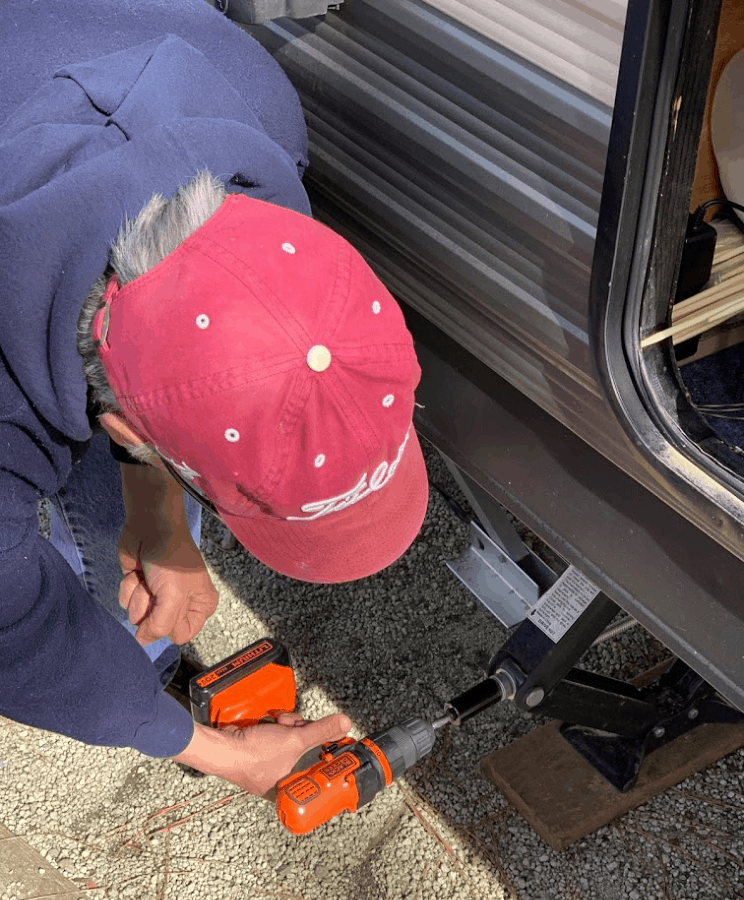
If you purchase a travel trailer or a fifth wheel, it will probably come with stabilizing jacks. Options on campers include both manual and electric stabilizing jacks. Electric stabilizing jacks are nice, but they are a pricey option. If you purchase a camper with manual stabilizing jacks, you can use an electric drill and a ¾ inch adapter to raise and lower them easily.
Air Conditioners
If you live or camp in a hot climate, you can never have too much air conditioning. We live in Georgia, and we have one 15,000 BTU unit that is optimal for the size of our camper. However, when traveling out west, where temperatures are routinely over 110 degrees, one air conditioner is not enough for our rig. Choosing a camper with two air conditioners will mean 50 amp coverage, but it is well worth it if you camp in hot climates.
Outdoor Kitchens
An outdoor kitchen is a useful addition if you like to cook outside. Most outdoor kitchens will include a small sink, a cooktop, and a small fridge. Some larger outdoor kitchens will also have a grill and/or a griddle. Many outdoor kitchens include counter space to prepare foods. These outdoor cooking areas are wonderful if you will use them. While an outdoor kitchen is nice, it will usually come at the expense of extra storage.

Outdoor Television
We see a lot of people at campgrounds using their outdoor televisions to watch sporting events, especially during football season. Our camper has an outdoor mount so that we can easily hang our inside TV on the outside of the camper. However, we have never done so. We do have a projector (Check it out on Amazon) that we will use outside at night to watch a ballgame or family movies (Read our article about watching television while camping). Depending on your needs, you can determine if you wanted a mounted TV or if options such as carrying a projector will suffice.

Purchasing a camper is a huge decision and commitment. It is difficult to find the perfect camper, but one is out there waiting for you. You should list your must-haves and wants, and try and find the camper that fits your needs and budget.
What are the features and amenities that you value in a camper? We would love to hear from you. Please drop us a line in the comment section below.


