
17 Common Campground Mistakes Made by Campers/RVers
One thing you can count on while camping is that mistakes will happen. Thankfully, most of these mistakes will eventually be laughed about around the campfire. Hopefully, we can help you avoid some errors by recalling some of the mistakes that we have made along the way, as well as those that we have watched fellow campers make.
Always Bring the Awning In Before a Storm
Unfortunately, many campers have lost their awnings because people leave them out during storms. If you have spent much time in the Southeast, you know that afternoon storms during the summer seem to come out of nowhere. For this reason, you must always close your awning before leaving the campground for the day. Anytime there is rain or strong winds in the forecast, be sure to bring in the awning because the storm can rip the awning right off the camper.
Adjust the Awning for Water Runoff
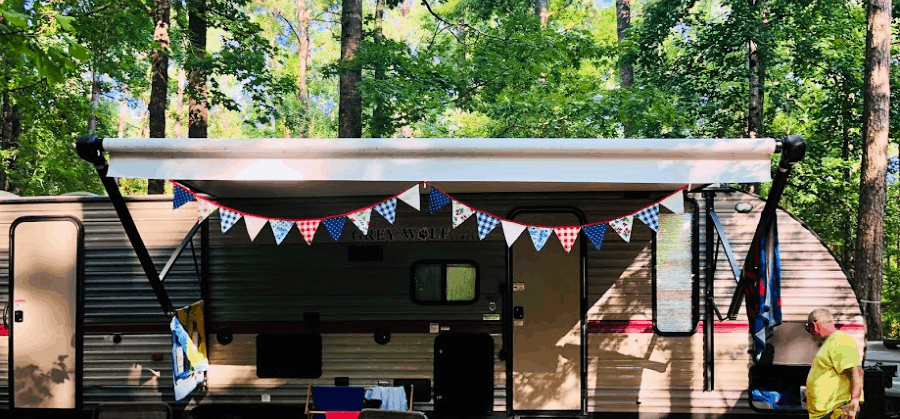
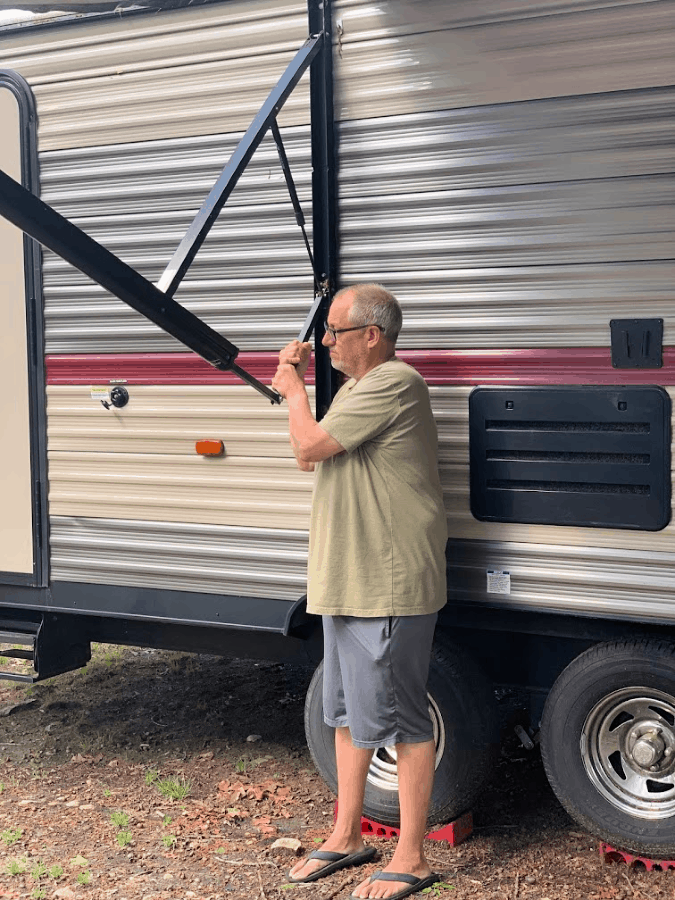
Another mistake that we see many RVers make is leaving the awning level. It is ok to leave the awning out during a light shower, but it is essential to lower one side. Lowering one side allows rain to run off instead of pooling on the awning and causing it to collapse or to constantly endure stress. You can pull down an arm of the awning to drop one side a few inches so that the rain will runoff. This is an easy fix and you will prevent damage to your awning.
Leave Enough Room to Extend Your Slide
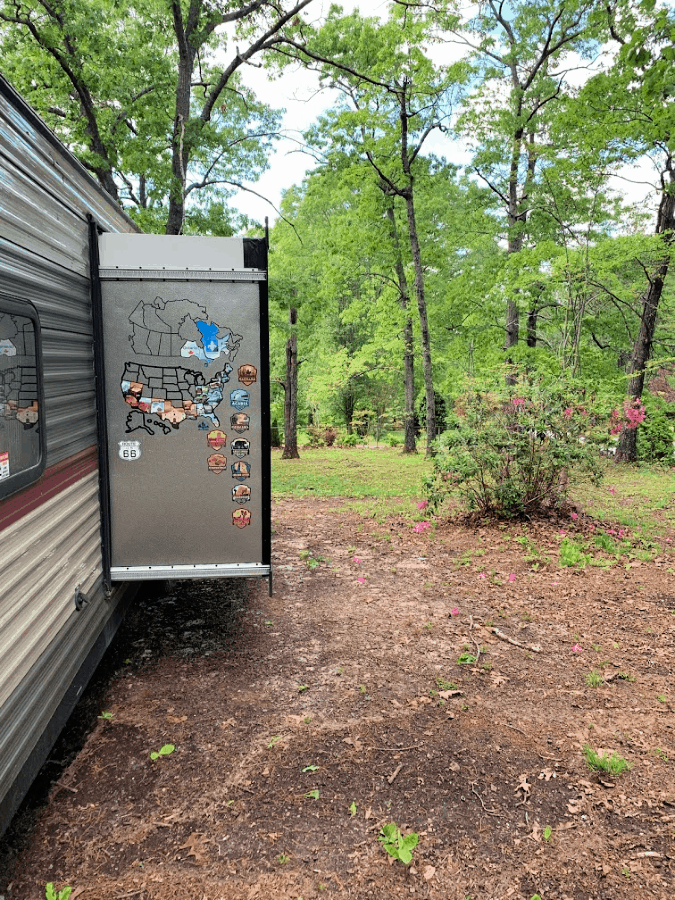
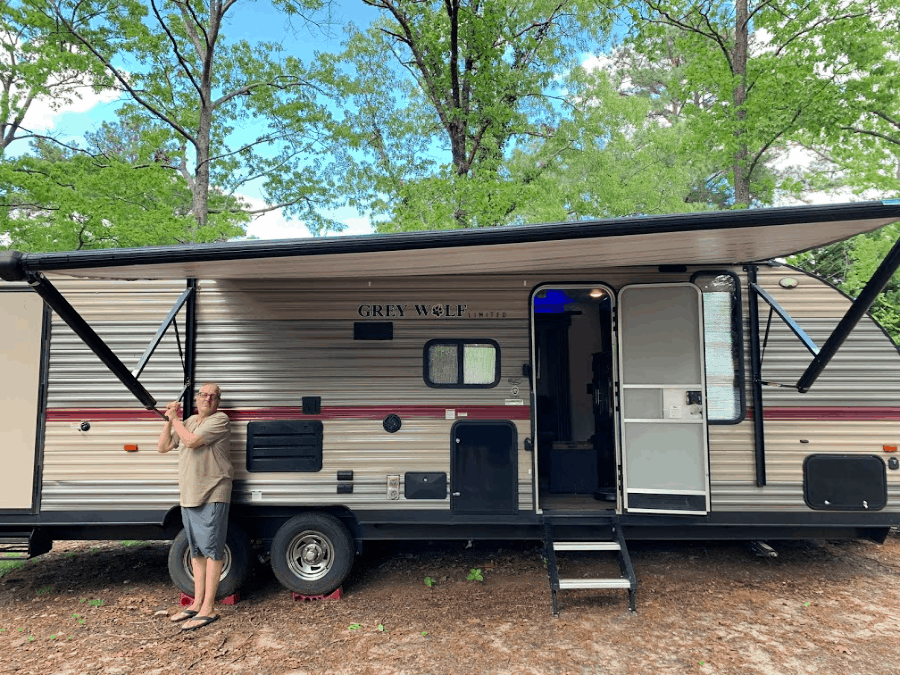
Failure to leave enough room to let out your slide is a common mistake, do not ask me how I know! Always walk around before unhooking and leveling your camper. When you make that walk around the camper, ensure that you have room for the slide.
We have seen campers parked so close to a tree or even the electrical box that there is not enough room to let the slide out. If you do this, you will have to re-hook the camper to your tow vehicle and completely move the camper so that you will have room for the slide. I heard of one camper who compounded their problem by letting out the slide only half-way, and then when it rained, the water leaked into the camper. Slides are designed to be retracted 100% or not at all.
Maintain Wheel Bearings
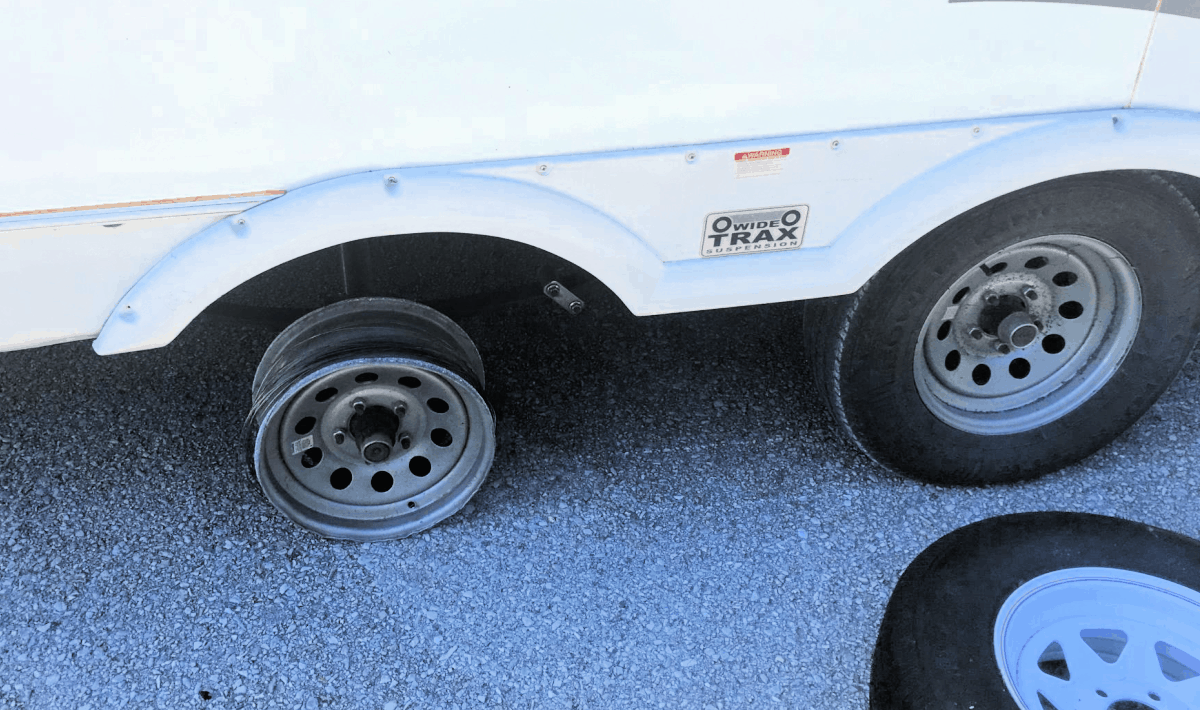
Failure to check and grease your wheel bearings can cause severe damage to your camper. This is a costly mistake that I made. I did not realize that wheel bearings needed to be lubricated. It is recommended that they are repacked every year or every 10,000 miles. I drove a couple of years without lubricating our bearings. After about 15,000 miles, my bearings overheated, leaving me on the side of the road with a ruined axle. This was a harsh lesson, and I had to leave the camper about three hours from home, where they had to replace one of the axles. Read here to learn more about tire safety.
Always Check Your Tire Pressure
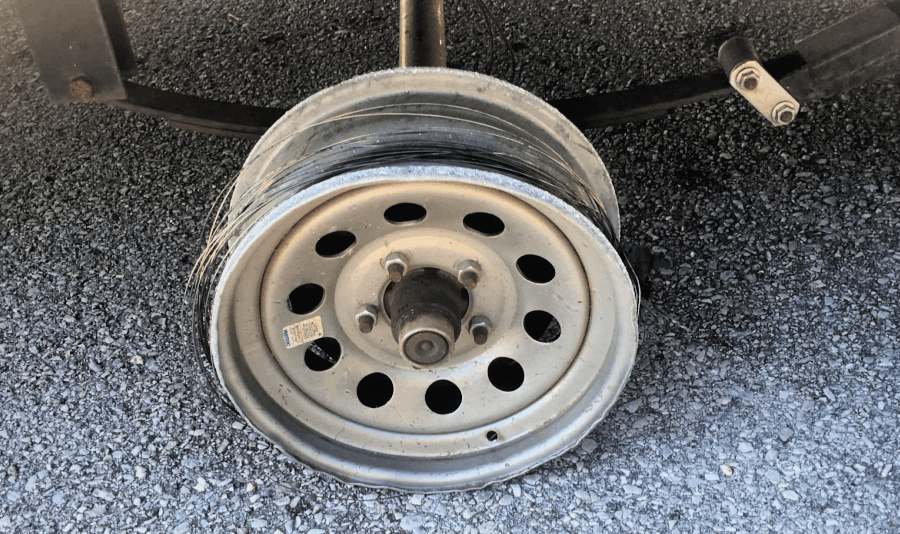
Always check tire pressure before traveling. Check the tires on your camper as well as your tow vehicle. When you are checking tire pressure, be sure to visually inspect your tires for dry rot, uneven wear, or other imperfections.
Plan for Gas Stops
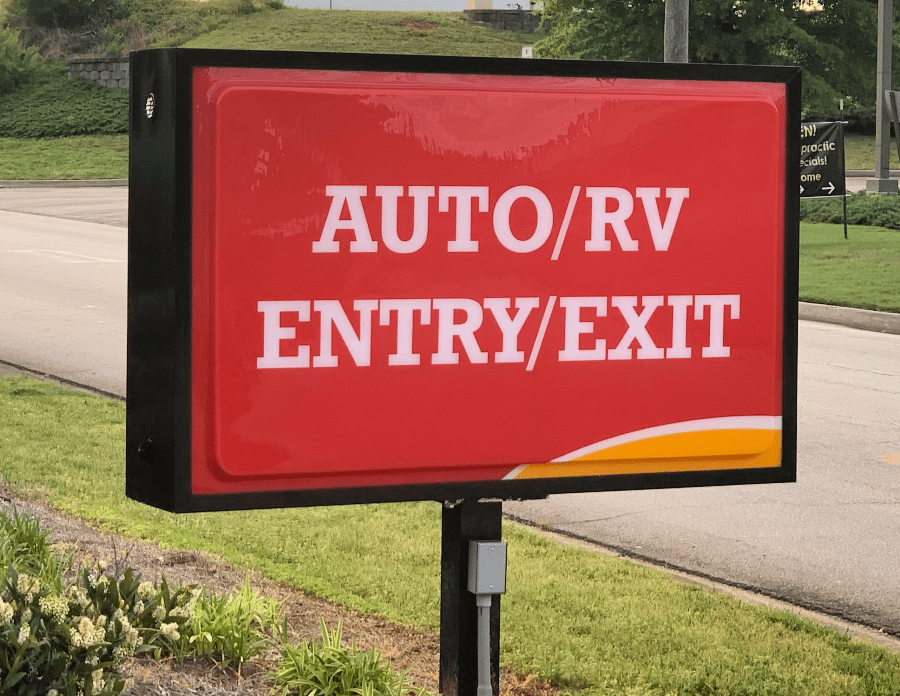
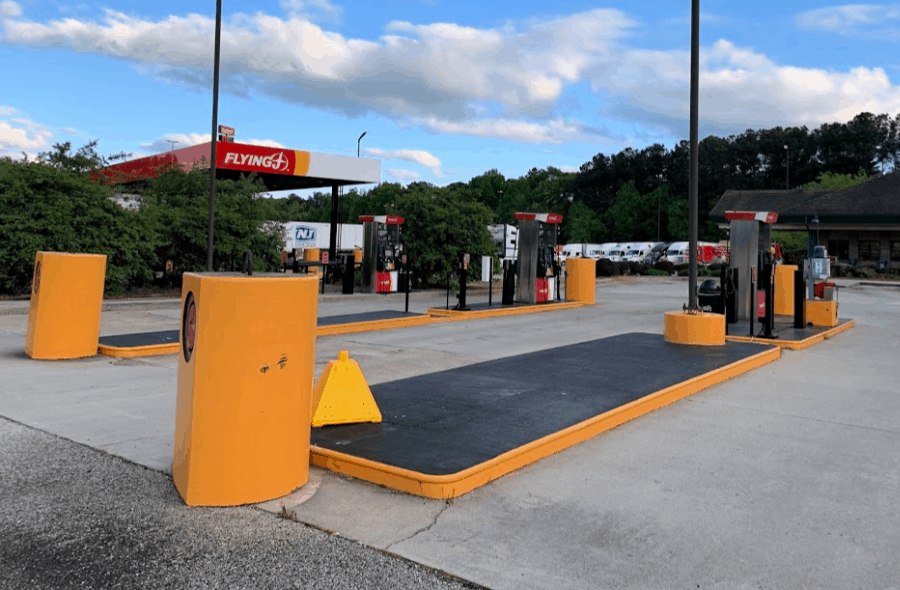
Have a good idea of how far you can travel on a tank of gas. I do not believe that driving around gas stations while pulling a camper is safe because there are so many pedestrians, so I always plan where I intend to stop and refuel. Our favorite places to purchase gas are the Pilot/Flying J stations, especially those with RV fuel lanes.
Planning fuel stops makes pulling in and out of stations while towing a camper easy. Most of the time stopping at a truck stop is a good way to ensure you have enough room to refuel and maneuver in and out of the parking lot, but that is not always the case. Sometimes, I will use the satellite view on Google Maps to take a good look at the gas station and make sure that I have room to maneuver.
Do Not Use Stabilizing Jacks to Level the Camper
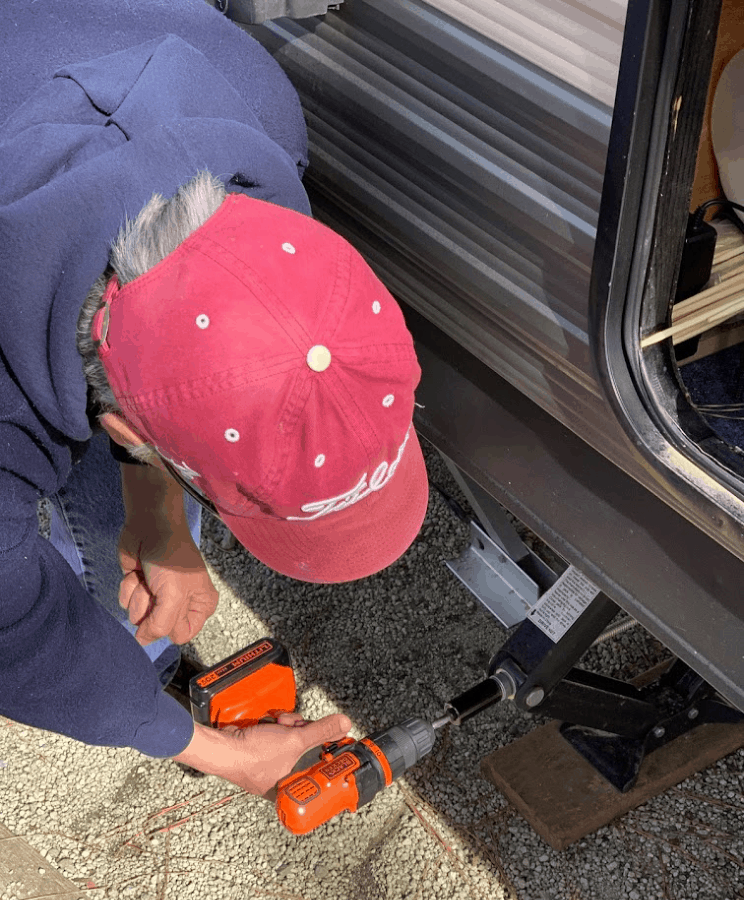
Using stabilizer jacks to support and level your camper is a huge mistake. Using them in this manner can ruin the stabilizer jacks, causing them to malfunction. The stabilizer jacks are not designed, and should never be used, to support and level your camper. Read here to learn more about leveling your camper.
Close the Vent Covers
Always double-check that your vent covers are closed after use. Leaving them open is a common mistake that is followed by a lot of rain in your camper. We camped with friends who had a tree knock their vent cover off because it was open while traveling. They had to use a tarp to keep the rain out of the open vent until it could be repaired.
Close Handle and Storage Doors
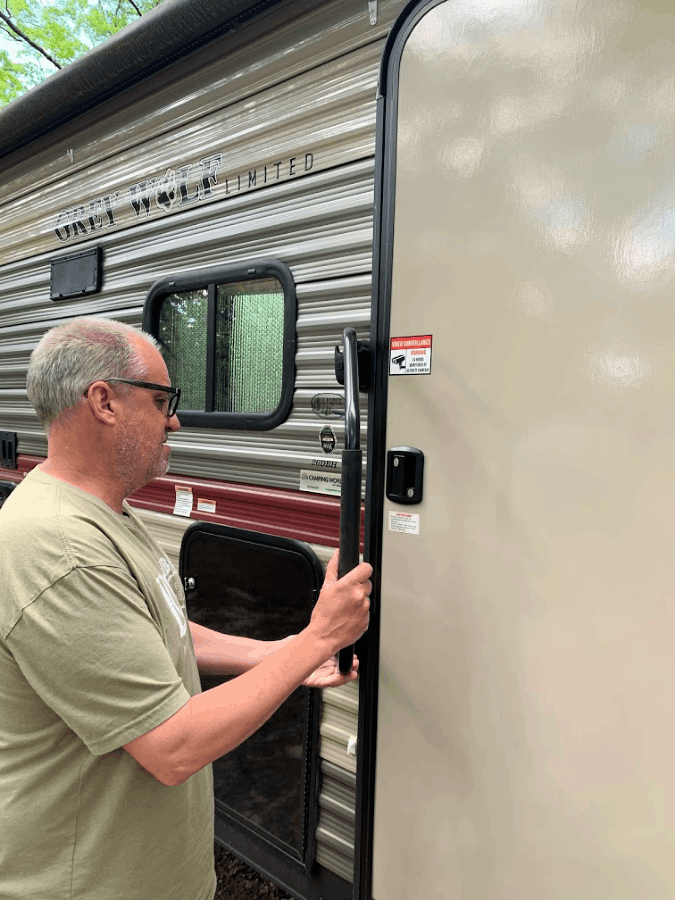
We have a fold-out handle on the side of our camper to grab as you walk up and down the stairs. Twice, we have forgotten to fold that handle back in before leaving. Each time I have heard honking and looked up to see the handle sticking out in my rear-view mirror. Thankfully, there was no damage either time, but I had to find a place to pull over and close the handle.
It is important to walk around your camper and check items like handles and storage doors. It is a good idea to make a list of all the things you want to double-check before leaving. Also, this may seem insignificant, but yes, you should ensure that all camper doors are closed and locked. We forgot to lock our door once, and somehow the door opened while we were driving.
Double Check that You Bring Everything With You
The most common mistake we have made while camping is forgetting items at home that we wanted to bring with us. We have taken two steps to solve this problem.
First, we rely on a travel app for packing. We use Packing Pro, but it is only available on IOS. However, there are plenty of other packing apps available (click here to learn app about essential travel apps). This packing app is customizable so that a new packing list can be created for each trip.
Our second tip is that we keep numerous duplicate items in the camper that we have at home. Having duplicates cuts down on packing and unpacking each time that we travel. For example, we have a full set of cooking utensils in the camper as well as extra bed sheets and pillowcases.
Complete Routine Maintenance
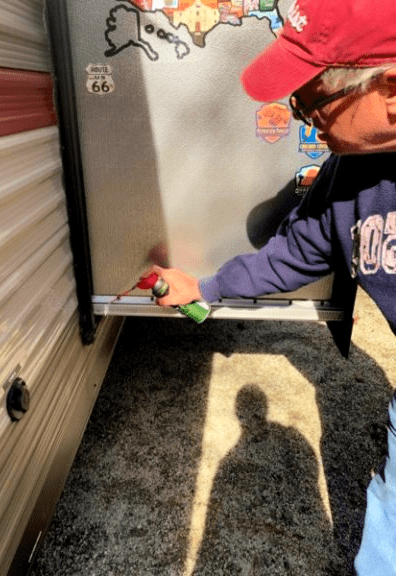
Check your roof at least every six months to ensure that there are no cracks in the silicone around the vents and other fixtures. Routine maintenance on your slide and slide seals is important as well. You must keep both the slide and seals lubricated so that they will continue to operate correctly (read this article on slide maintenance). Failure to make routine checks can lead to costly repairs later.
Keep Your Camper Secure
Failure to properly secure your camper as well as its components can be a costly mistake. Unfortunately, camper theft is a real threat. We hear stories almost daily about how someone’s camper or camper components have been stolen. Also, do not forget to secure items such as propane and the battery (read here to learn how to keep your camper secure).
Check the Outside of Your Camper Before Closing the Slide
Make sure that you clean the top of your slide before closing it. While you are camping, debris will gather on the top of your slide. Without proper cleaning, you will trap debris between the top of your slide and the camper. This debris will damage the slide and it seals. Debris can also prevent the slide from closing completely, which will allow rain to leak into your camper.
If it rains, be sure to wipe down the slide before closing it (we have been in the rain many times pushing puddles of water off the top of the slide). The seal on top of the slide will not prevent all of the standing water from entering your camper. Now you have a mess in your camper as the water runs off the slide into the interior of your camper as you drive.
Check the Inside of Your Camper Before Closing the Slide
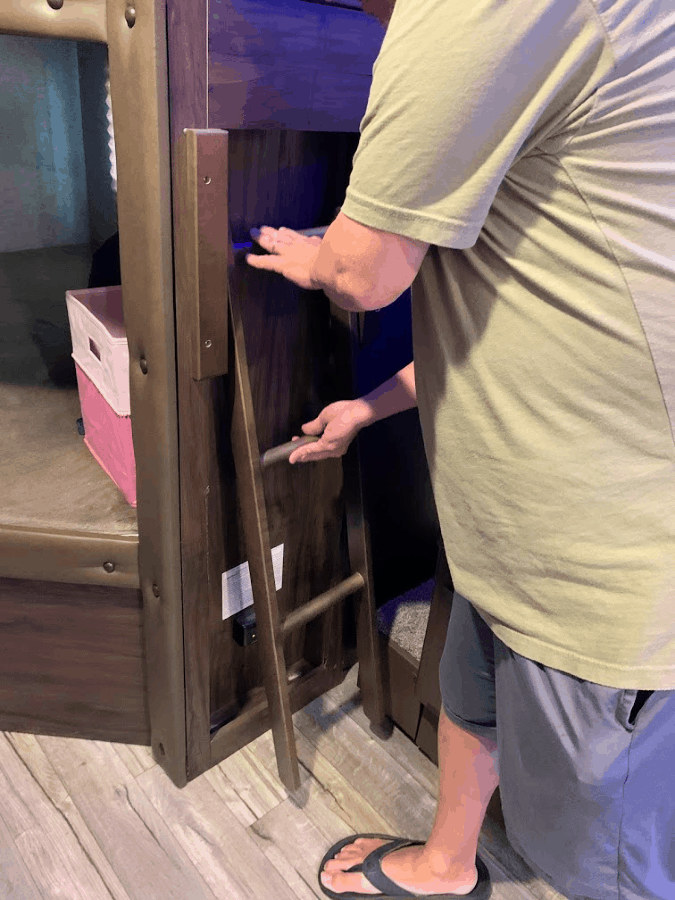
Failure to get interior items out of the way before closing the slide can be a costly mistake. Ensure that nothing is in the way of your slide before you bring it in. We have a ladder that gets pulled out for the top bunk. The ladder did not get put away correctly once. As the slide was closing, we heard the cracking of the wood where the slide was crushing the ladder as it closed. Luckily, we were able to stop the slide before too much damage was done. However, we did have to repair and restain the area.
Raise Your Stabilizing Jacks Before Connecting Your Camper
Failure to raise your stabilizer jacks before hooking your camper up to your tow vehicle can damage them. If you start raising the camper jack with the rear stabilizers down, it will put tremendous pressure on the rear jacks. That pressure can permanently damage those jacks.
When we first published the article, we had 15 common mistakes for campers that we wanted to share with you. However, a fellow camper, Peter, reminded us of two more areas that can cause havoc on your camper if you don’t remember them. We would like to share these issues as well.
Pulling in Your Stairs Before Traveling
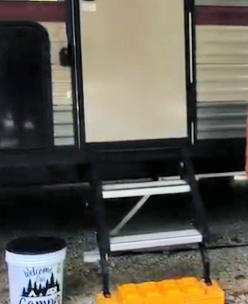
These days, campers are either equipped with a traditional set of pull-down stairs or the newer MORride style of stairs. Our camper has a set of each. Many people have left the campground with their stairs still lowered. Since stairs in “down mode” are a part of your view for most of your camping trip, it is easy to forget that they must be raised before you leave the campground. For traditional stairs, danger comes from getting too close and hitting something with your stairs on the road, such as a car, tree, sidewalks, etc. The impact of the stairs hitting an object while the camper is moving can cause severe damage to your rig and the object.
For the newer style of stairs, the damage of leaving the stairs lowered will happen immediately as you pull away. MORride style stairs are stationary on the ground, so when the camper begins to move, it is going to jar the stairs into the ground and this will definitely damage the stairs and your camper.
Lowering Your Antenna Before You Leave the Campground
This is an issue that I see on signs, but I have never had a camper fancy enough to be equipped with what is called a Windgard super turnstile or “batwing” antenna. With batwing antennas, when you get to your destination, you can push a button that raises an antenna. The antenna will rotate until it finds the best reception. However, if you forget to lower the antenna before you leave, it can snap off of your camper if you hit something, or worse, rip a chunk off your roof. I can’t imagine how upsetting it would be to have a great camping trip, only to end up with roof damage because you forgot to lower the batwing.
Thank you, Peter!
We definitely want to prevent others from making the same costly mistakes that we have made. Have you made any camping errors? We would love to share your advice. Please drop us a line in the comment section below.


